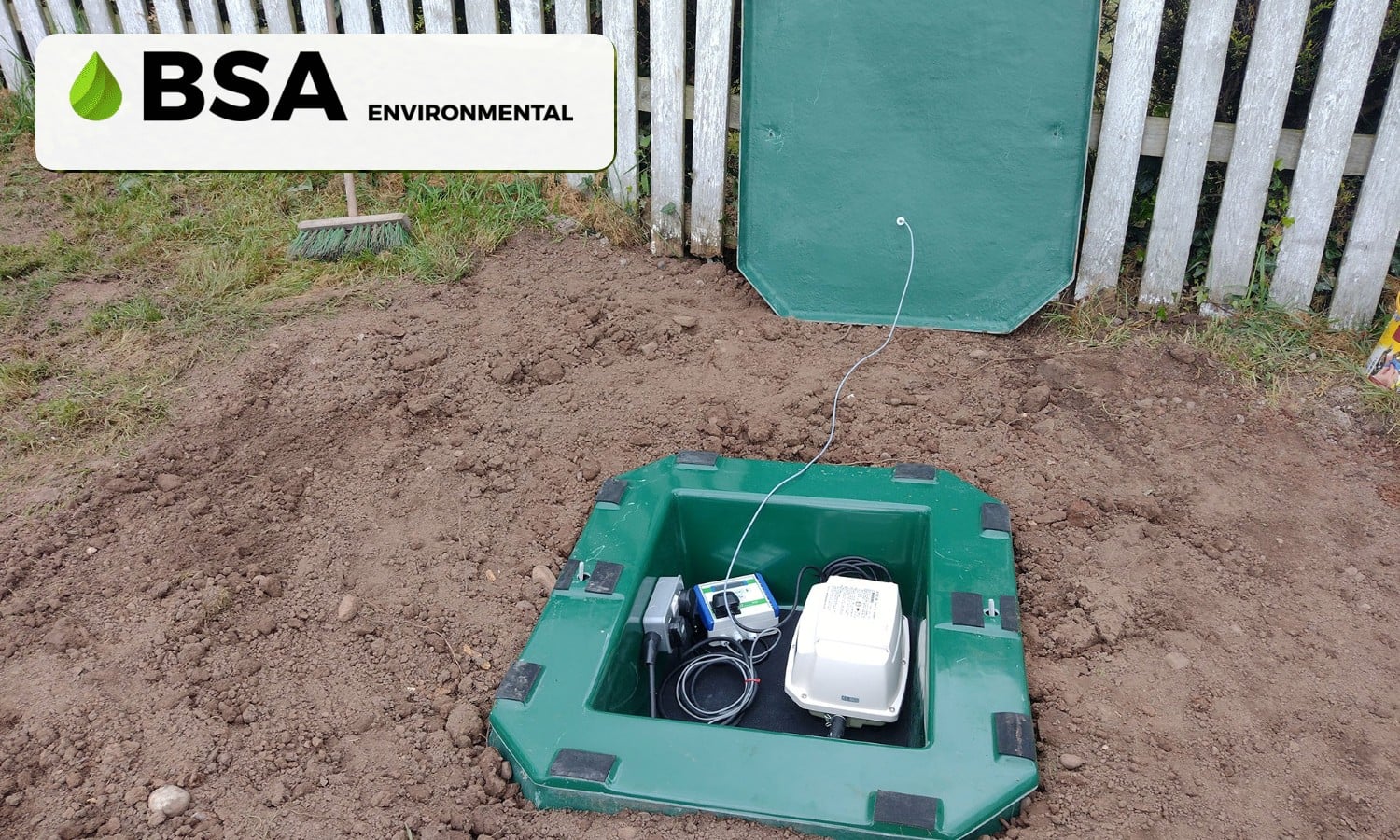
How often should a septic tank be emptied? For most homes in England, at least once a year. That is the minimum the Environment Agency expects under the general binding rules, unless your tank manufacturer specifies a different schedule. The legal requirement is that sludge is removed before it reaches the tank’s maximum capacity, so a busy household or a smaller tank may need emptying more often.
Below we explain what the rules actually say, what affects how quickly your tank fills, the warning signs that it’s overdue, and why autumn is a good time to book. We empty, service and repair septic tanks across Solihull, Warwickshire, Worcestershire and the wider West Midlands, so this guide draws on our engineers’ day-to-day work.
How often should a septic tank be emptied? What the rules say
If your septic tank or sewage treatment plant discharges to ground or to a watercourse, it has to meet the Environment Agency’s general binding rules. On emptying, the guidance is clear. You must have the sludge removed (known as desludging) before it goes beyond the tank’s maximum capacity, and you should do this at least once a year or in line with the manufacturer’s instructions.
The rules also say:
- The company that empties your tank must be a registered waste carrier.
- Your system must be repaired or replaced if it isn’t in good working order, for example if it leaks, has blocked pipes, gives off sewage smells or has a failed pump.
- You must not cause pollution of groundwater or surface water. If your discharge causes pollution, you may be committing an offence.
The full requirements are on the government’s septic tanks and sewage treatment plants page. If you’re unsure whether your system meets them, an inspection is the quickest way to find out.
Why septic tanks need emptying at all
A septic tank separates the waste water from your home into three layers. Heavy solids sink to the bottom as sludge, fats and lighter material float to the top as scum, and the partly treated liquid in the middle flows out to a drainage field. A drainage field is a network of perforated pipes that lets the liquid soak slowly into the ground.
Bacteria break down some of the sludge, but never all of it. Over time the sludge layer builds up and the space for liquid shrinks. When that happens, solids start to escape with the outflow and block the drainage field. A blocked drainage field is one of the most disruptive and costly problems a septic system can have, and regular emptying is the simplest way to prevent it.
What affects how often your septic tank needs emptying?
So how often should a septic tank be emptied at your property? Once a year is the baseline, but every property is different. These are the factors that make the biggest difference:
- Number of people in the house. More people means more waste water and faster sludge build-up. Extra guests over Christmas, a growing family or a lodger all count.
- Tank size. A tank that was sized for a smaller household, or an older tank on an extended property, will fill sooner.
- What goes down the drains. Cooking fats, wet wipes, sanitary products and heavy use of bleach or harsh cleaners all add solids or upset the bacteria that do the work.
- Water use. Lots of laundry or long showers in a short space of time push liquid through faster, giving solids less time to settle.
- Holiday lets and part-time use. Lets that are busy in peak season and empty in winter put a very uneven load on a system.
- The manufacturer’s guidance. Some tanks and treatment plants come with a specific desludging schedule. If yours does, follow it.
The best way to set the right interval is to have the sludge level checked when the tank is emptied. Our engineers can tell you whether once a year is enough for your household or whether you’d be better on a shorter cycle.
Signs your septic tank needs emptying
Don’t wait for these to appear. But if you notice any of them, book an emptying as soon as possible:
- Sinks, showers and toilets draining slowly across the house, not just in one room.
- Gurgling sounds from plughole or toilets.
- Sewage smells around the tank, the drainage field or inside the house.
- Unusually wet, spongy or lush green patches of ground over the drainage field.
- Waste water backing up into the lowest drains or the inspection chamber.
- It’s more than a year since the tank was last emptied, or you simply don’t know.
Several of these signs can also point to a blocked pipe, a failing drainage field or structural damage to the tank. If emptying doesn’t solve the problem, our guide on when to repair or replace your septic tank explains the next steps.
Why autumn is a good time to empty your septic tank
In the West Midlands, autumn and winter bring heavier rain and wetter ground. A saturated drainage field drains more slowly. If your tank is already full of sludge, that combination is when problems tend to show up: slow drains, smells and wet ground around the soakaway.
Emptying before winter gives your system the most capacity at the time of year it’s under most pressure. It also means a tanker can reach the tank before fields, tracks and driveways become waterlogged. And if you’re expecting family over Christmas, an empty tank copes far better with the extra load.
Septic tanks vs sewage treatment plants: emptying compared
Sewage treatment plants work differently from septic tanks. They use a motor or air pump to treat the waste water more fully, but they still collect sludge and still need desludging.
| Septic tank | Sewage treatment plant | |
|---|---|---|
| Needs desludging? | Yes | Yes |
| How often | At least once a year, or per manufacturer’s instructions | Per manufacturer’s instructions; usually alongside a regular service |
| Other maintenance | Check outlet, baffles and drainage field | Service mechanical and electrical parts (pump, blower, alarms) |
| Can it discharge to a watercourse? | No, it must discharge to ground through a drainage field | Yes, subject to the general binding rules or a permit |
If you have a treatment plant, read our guide on how often a sewage treatment plant should be serviced.
What happens when we empty your septic tank
A septic tank emptying is usually quick and causes little disruption:
- Access. We locate the tank and lift the access cover. The tanker needs to get within hose reach, so let us know about narrow lanes, gates or soft ground when you book.
- Desludging. The tank contents are removed by vacuum tanker and taken away for licensed disposal.
- Visual check. While the tank is empty, our engineer looks at the inlet and outlet, the condition of the tank and any obvious issues with the drainage field.
- Advice. We’ll tell you if anything needs attention and recommend when the next emptying should be.
If we spot a problem below ground, we can follow up with a CCTV drain survey to see exactly what’s going on before any digging starts. You can see the kind of work we do in our new septic tank and soakaway case study.
Keeping your tank healthy between emptyings
- Only flush toilet paper, never wipes (even “flushable” ones), cotton buds or sanitary products.
- Scrape fats and food waste into the bin rather than down the sink.
- Spread out laundry over the week instead of doing it all in one day.
- Use cleaning products in moderation and avoid pouring bleach or chemicals down the drain.
- Keep vehicles, heavy machinery and new planting off the tank and drainage field.
- Keep a record of every emptying and service. If you sell your home, the general binding rules require you to tell the buyer in writing that a sewage discharge is in place, along with maintenance details and records where you have them.
Frequently asked questions
Do septic tanks need to be emptied?
Yes. Every septic tank collects sludge that bacteria can’t fully break down. Under the Environment Agency’s general binding rules, the sludge must be removed before it goes beyond the tank’s maximum capacity, and this should be done at least once a year or in line with the manufacturer’s instructions. Leaving it longer risks solids escaping and blocking your drainage field.
How can you tell if your septic tank is full?
Common signs are slow-draining sinks and toilets throughout the house, gurgling plugholes, sewage smells around the tank or garden, and wet or unusually green ground over the drainage field. In more serious cases waste water backs up into the lowest drains. If you notice any of these, or can’t remember when it was last emptied, book an emptying.
How much does it cost to empty a septic tank?
The cost depends mainly on the size of the tank, how much needs removing, how easy it is for a tanker to reach, and whether you combine emptying with a service or inspection. Regular emptying costs far less than repairing a blocked drainage field. Call us for a quote based on your tank and location.
Do sewage treatment plants need emptying?
Yes. A sewage treatment plant treats waste water more thoroughly than a septic tank, but it still builds up sludge that has to be removed. Follow the manufacturer’s desludging schedule, which is usually carried out alongside a regular service of the plant’s pumps, blowers and alarms.
How long do septic tanks last?
A well-installed septic tank can last many years, but its lifespan depends on the tank’s material and condition, the ground it sits in, and above all how well it’s maintained. Regular emptying is the single biggest factor in avoiding early failure. If your tank is leaking, cracked or keeps causing problems, it may be time to consider repair or replacement.
Book a septic tank emptying with BSA Environmental
We provide septic tank emptying, cesspool and sewage treatment plant pump-outs, and maintenance for homes, farms and businesses across Solihull, Birmingham, Coventry, Warwick, Leamington Spa, Stratford-upon-Avon, Redditch, Bromsgrove, Worcester and the surrounding areas.
Call us on 01564 784899 or get in touch online to book your emptying before winter, or if you are unsure how often your septic tank should be emptied. Find out more about our pump-out and emptying service, our septic tank and soakaway services and our maintenance services.