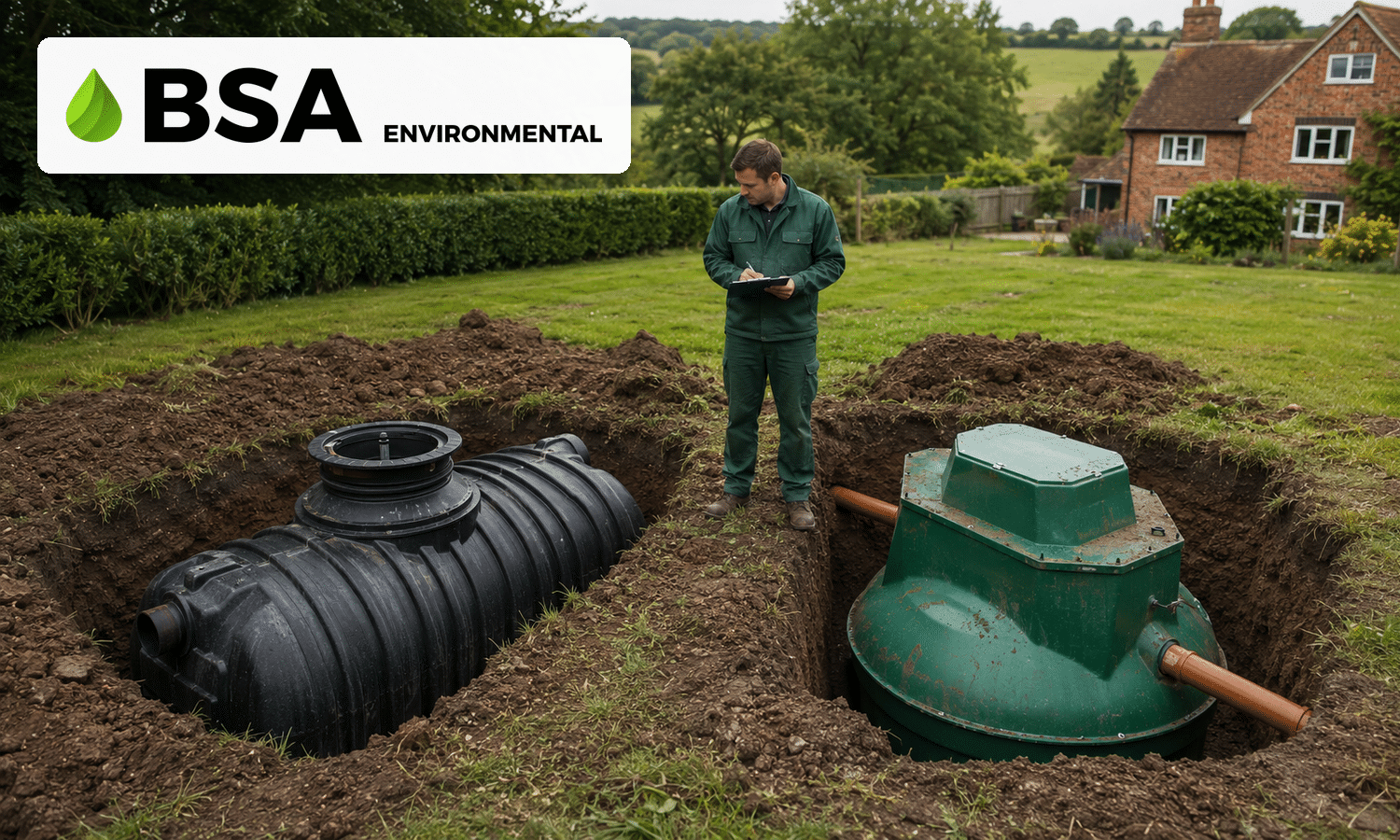
Properties that are not connected to the main sewer network need a reliable way to manage wastewater. Septic tanks and sewage treatment plants are two common options, but they work differently and suit different properties.
Choosing between septic tanks or sewage treatment plants depends on factors such as the location of your property, available space, ground conditions, wastewater requirements and the condition of any existing system. A professional site assessment can help you make an informed decision.
How does a septic tank work?
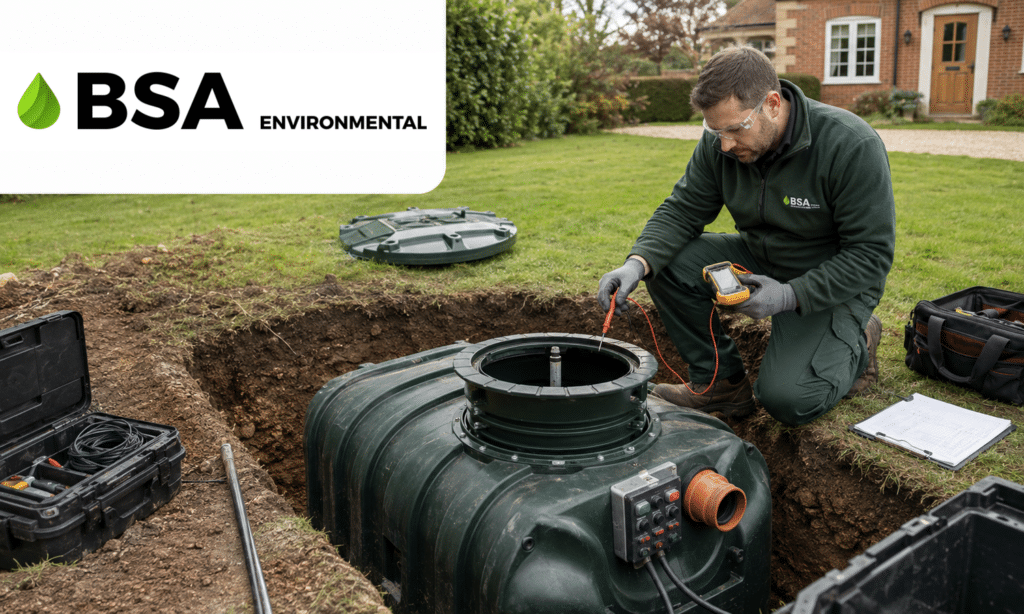
A septic tank collects wastewater from toilets, bathrooms and kitchens. Solid waste settles at the bottom of the tank, while oils and lighter materials rise to the surface. The remaining liquid leaves the tank and passes into a suitable drainage field, where it filters gradually through the surrounding soil.
Septic tanks have a relatively simple design and contain fewer mechanical components than sewage treatment plants. However, they require regular emptying and maintenance. The drainage field must also be suitable for the property and remain in good condition.
How does a sewage treatment plant work?
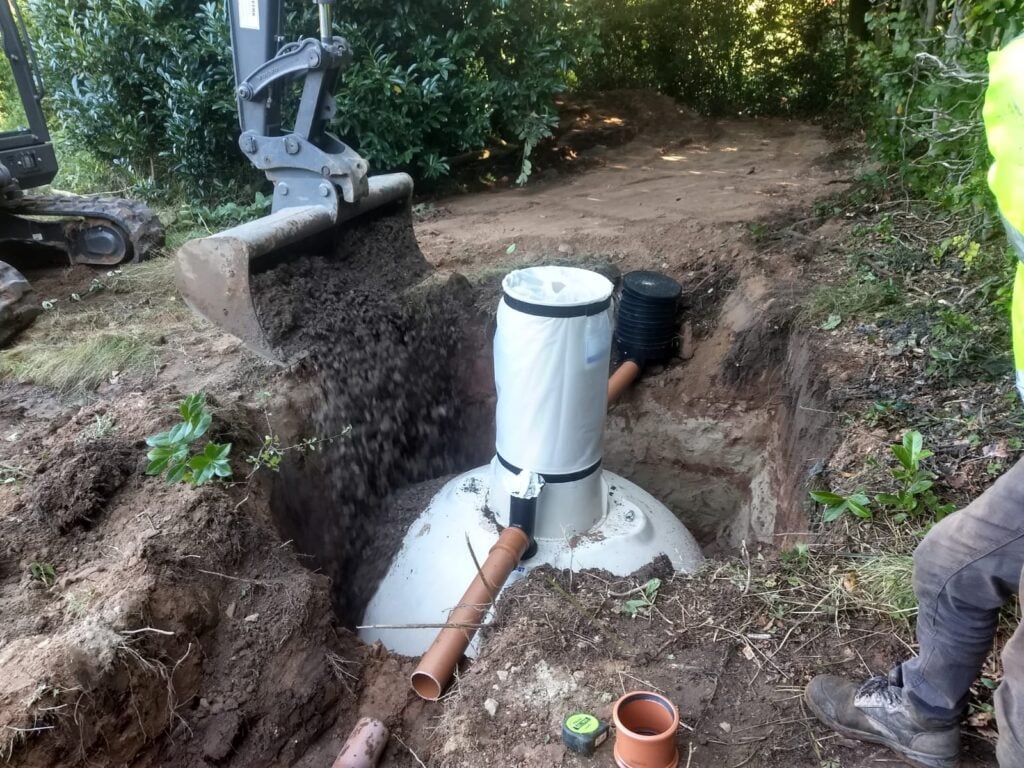
A sewage treatment plant processes wastewater using several treatment stages. Many systems use mechanical components and biological processes to improve the quality of the water before it is discharged through an approved arrangement.
Treatment plants can provide a higher level of wastewater treatment than traditional septic tanks. They may be suitable for homes, commercial premises, farms, hospitality venues and other properties without access to the public sewer network.
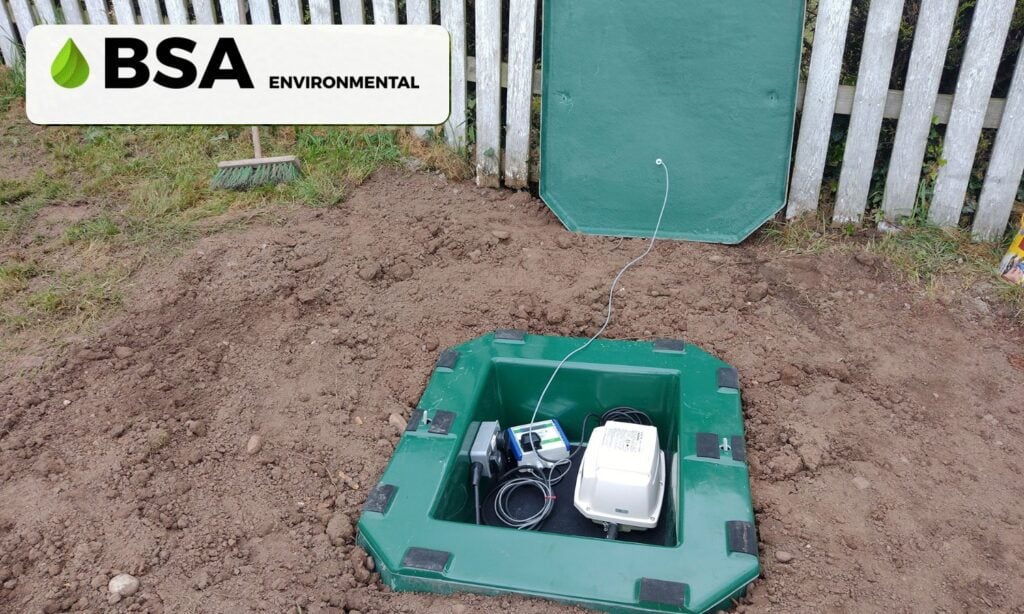
Pumps, blowers, control units and other components require professional servicing to keep the system operating effectively.
Which system requires more maintenance?
Both systems need regular professional attention. A septic tank must be emptied at suitable intervals to prevent excessive sludge from entering the outlet or drainage field. Its pipework, chambers and drainage field should also be inspected for damage or blockages.
A sewage treatment plant needs emptying as well as routine servicing. During a service, an engineer can inspect mechanical and electrical components, assess treatment performance and identify developing faults.
Although a treatment plant has more components to maintain, regular servicing can help provide reliable performance and reduce the risk of unexpected breakdowns.
Consider the available space and ground conditions
The suitability of a septic tank depends heavily on the surrounding ground. There must be enough space for an effective drainage field, and the soil must allow wastewater to disperse safely.
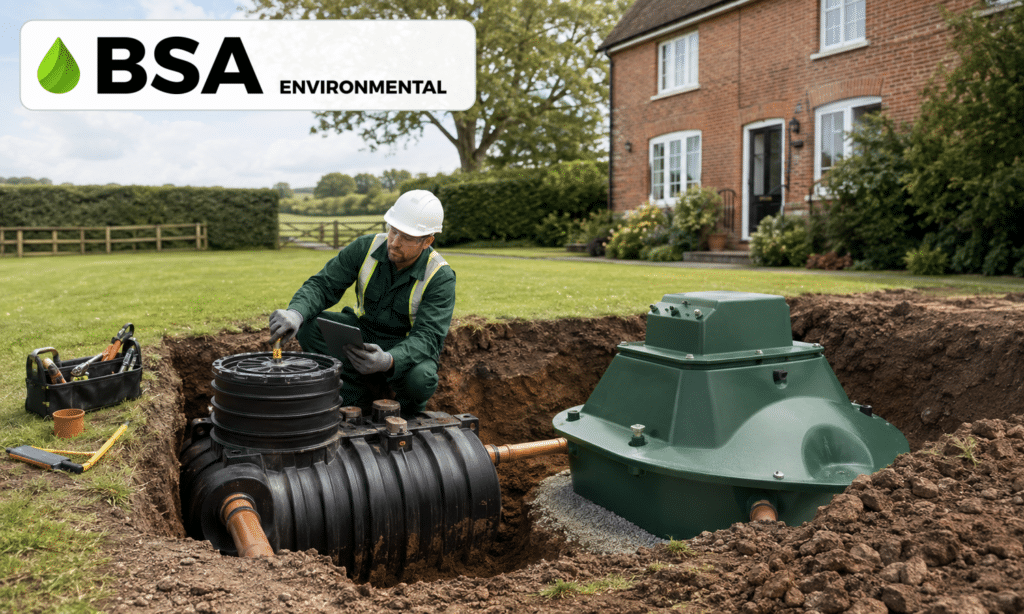
A sewage treatment plant may offer more flexibility in some locations, but the proposed discharge arrangement must still be assessed carefully. Access is also required for installation, servicing, repairs and emptying.
A professional survey can consider the property layout, ground conditions, expected usage and nearby buildings or watercourses.
Should you replace an existing septic tank?
An existing septic tank may continue to provide dependable service if it is suitable, compliant and properly maintained. However, replacement may be recommended if the tank is damaged, regularly overflowing or connected to a failing drainage field.
A sewage treatment plant could provide a practical alternative where improved wastewater treatment is required. The correct choice will depend on the condition of the existing system and the needs of the property.
Warning signs such as persistent smells, slow drainage, standing water and overflowing chambers should be investigated promptly.
Professional advice for your property
There is no single wastewater system that is right for every property. Septic tanks can provide a simple and effective solution where ground conditions support a suitable drainage field. Sewage treatment plants offer enhanced treatment and may be better suited to properties with different discharge requirements.
BSA Environmental provides professional septic tank and sewage treatment plant services across Solihull, Worcestershire, Shropshire and the wider West Midlands. Our team can assist with assessments, installation, servicing, maintenance and repairs.
Call 01564 784899 or 07538 467 611, or email info@bsaenvironmental.co.uk to discuss the right wastewater solution for your property.