Buying a house with a septic tank is perfectly normal in rural England, but the tank comes with legal responsibilities that pass to you on completion. Before you exchange, find out what type of system the property has, where it discharges, and whether it meets the Environment Agency’s general binding rules. If you are selling, you must give the buyer written details of the system.
Across Warwickshire, Worcestershire and the rural edges of the West Midlands, plenty of homes are not connected to the mains sewer. This guide explains what buyers should check, what sellers need to hand over, and when a septic tank survey is worth arranging before the sale goes through.
Why a septic tank matters when buying a house
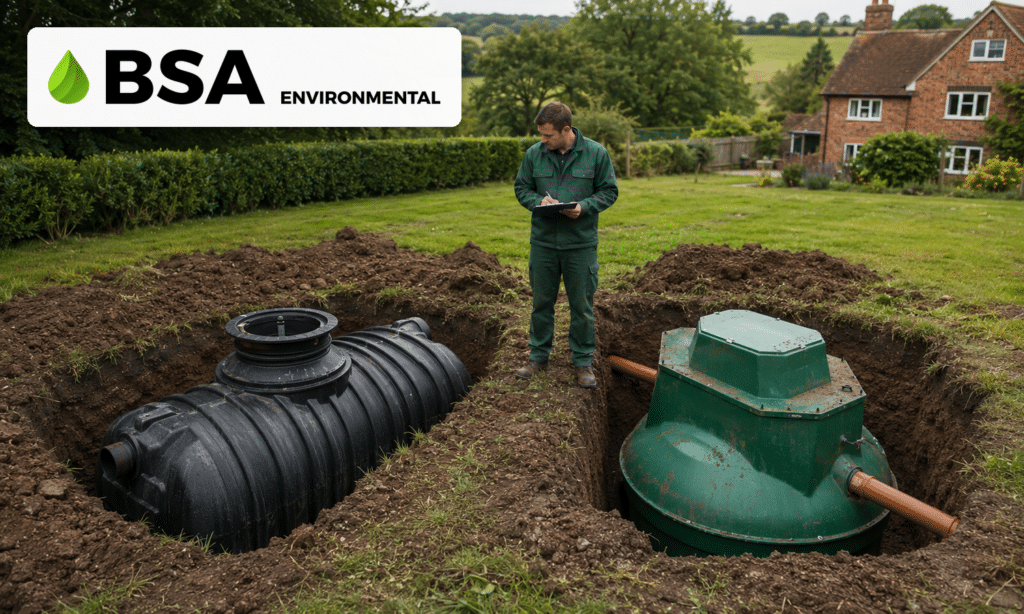
A septic tank is an underground tank that separates the solids from the waste water leaving your home. The liquid (called effluent) then flows out to a drainage field, which lets it soak slowly into the ground. Because the system sits on private land, the owner is responsible for keeping it working and for any pollution it causes.
That responsibility is set out in the general binding rules for small sewage discharges to the ground. These are the conditions a system must meet to run without an environmental permit. When you buy the property, you become the “operator” in the eyes of the rules, so any problems become your problems too.
What to check before buying a house with a septic tank
Ask the seller and your conveyancer for answers to the questions below.
1. Is it really a septic tank?
Sellers and estate agents often call any off-mains system a “septic tank”. The property may in fact have a sewage treatment plant (which treats waste water to a higher standard using air and bacteria), a cesspool (a sealed tank with no outlet that must be emptied often), or a pumping station that sends waste uphill. Each has different rules, running costs and maintenance needs.
2. Where does it discharge?
This is the most important question. Under the rules, you must not discharge effluent from a septic tank directly to a watercourse such as a stream, ditch or river. A septic tank should discharge to ground through a drainage field. If the outlet goes to a watercourse, the system will need to be upgraded or replaced, usually with a sewage treatment plant.
3. Does it meet the general binding rules?
A few points from the rules are worth checking with the seller and your surveyor:
- The system should discharge 2 cubic metres (2,000 litres) a day or less to ground.
- For a single property, the rules cannot be met if a public foul sewer is within 30 metres of any boundary of the premises.
- You cannot meet the rules by discharging through a well or borehole, or through a soakaway installed after December 2007.
- Systems in or within 50 metres of certain protected sites, or in an inner groundwater protection zone, need a permit instead.
If the system does not meet the rules, it may need a permit from the Environment Agency or changes to the system. The gov.uk guide to septic tanks and treatment plants explains the permit route.
4. Is it in good working order?
The rules say the system must be repaired or replaced if it is not in good working order. Warning signs include sewage smells, slow drains, soggy or unusually green patches over the drainage field, cracked lids and blocked pipes. Our guide on when to repair or replace a septic tank covers these in more detail.
5. When was it last emptied?
Ask for emptying receipts. The rules say a septic tank should be emptied (desludged) before it reaches its maximum capacity, at least once a year or in line with the manufacturer’s instructions, by a registered waste carrier. A tank with no emptying history is a reason to look more closely. Read more in how often a septic tank should be emptied.
6. Is it shared, and where is it?
Some tanks serve more than one house, or sit on a neighbour’s land. Your conveyancer should confirm who owns the tank and the drainage field, who has the right to access them for emptying and repairs, and how costs are shared.
Do you need a septic tank survey?
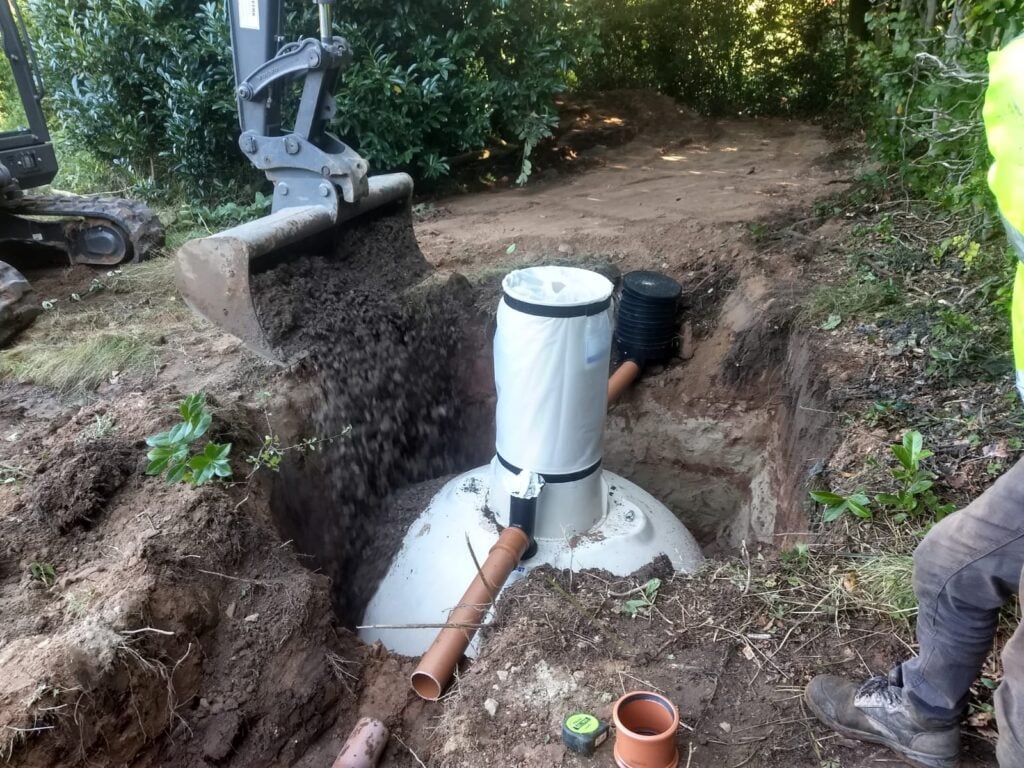
A standard homebuyer survey usually notes that a property has private drainage but does not test it. A specialist septic tank survey (sometimes called a septic tank inspection) looks at the system itself. It is the best way to find out whether the tank and drainage field are working before you commit.
A typical drainage inspection may include:
- identifying the type of system and, where possible, its age and make;
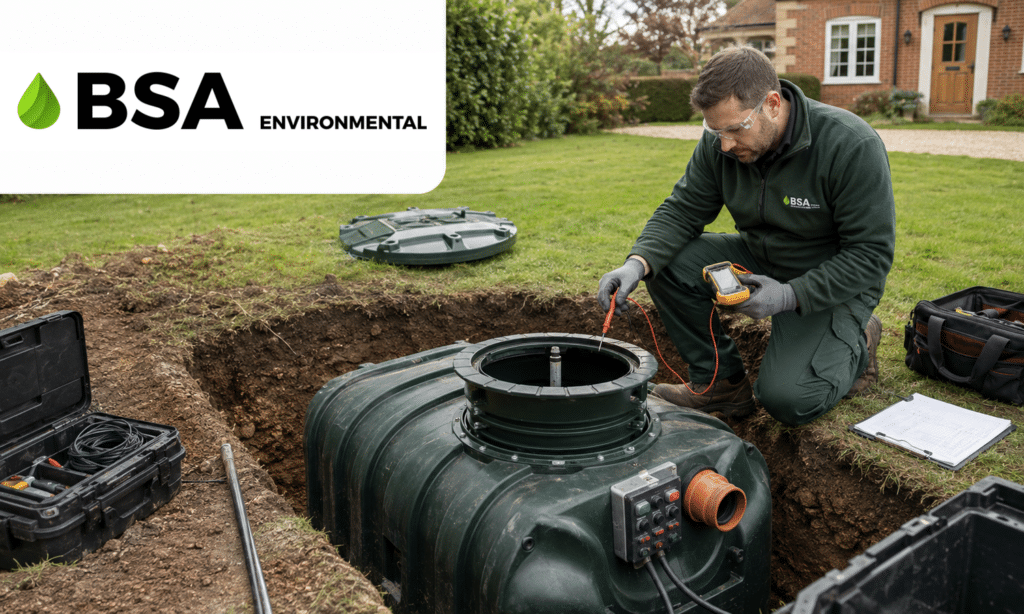
- checking the tank’s condition, inlet and outlet pipes, baffles and lids;
- tracing where the system discharges and checking the drainage field;
- a CCTV drain survey of the pipes between the house and the tank, where needed;
- a view on whether the system appears to meet the general binding rules.
It is often easier to inspect a tank that has recently been emptied, so ask the seller whether a pump-out can be arranged before the visit.
When buying a house with a septic tank, arrange the survey before exchange of contracts. If it finds problems, you can ask the seller to put them right, agree a price reduction, or set aside money for the work.
Selling a house with a septic tank
Yes, you can sell a house with a septic tank. Selling a house with a septic tank does come with one clear legal duty, though. Under the general binding rules, you must tell the new operator in writing that a sewage discharge is in place. You should include:
- a description of the treatment system and drainage system;
- the location of the main parts of the system, the drainage system and the discharge point;
- details of any changes made to the tank and drainage system;
- details of how the system should be maintained, and maintenance records if you have them.
Pulling this together early can save weeks of back-and-forth between solicitors.
If you already know the system discharges to a watercourse or is failing, it is usually better to deal with it, or at least get it assessed and priced, before you go to market. A buyer’s surveyor or solicitor is likely to ask about it anyway, and an unknown problem tends to cost more at the negotiating table than a known one.
Septic tank, treatment plant or cesspool: quick comparison
| System | How it works | Where it discharges | What buyers should check |
|---|---|---|---|
| Septic tank | Settles solids; basic treatment | To ground via a drainage field only | Discharge point, drainage field condition, emptying history |
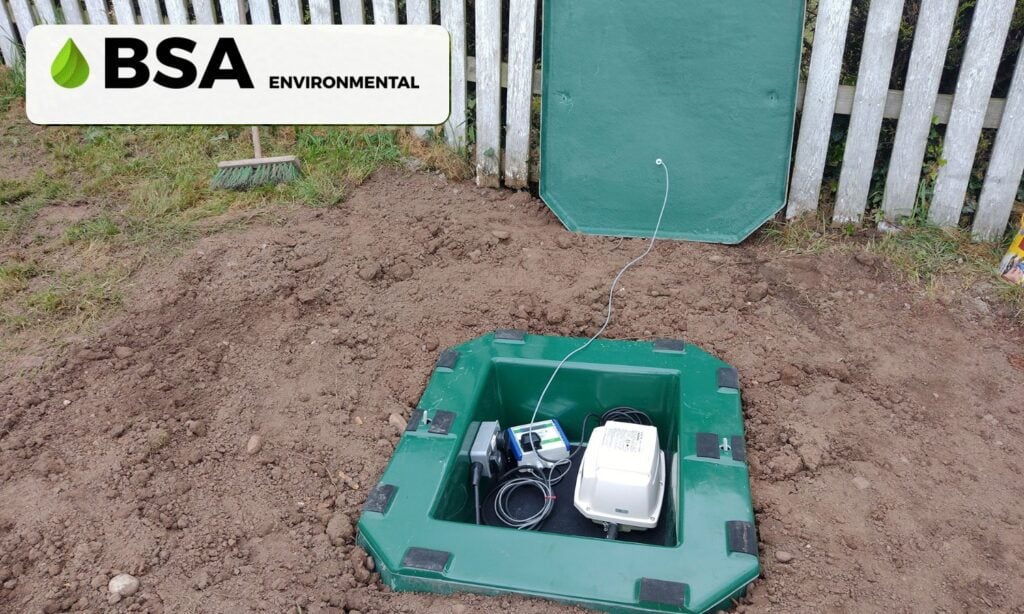
| Sewage treatment plant | Uses air and bacteria for fuller treatment | To ground, or to a watercourse within the rules | Service records, working pump or blower, alarm |
| Cesspool | Sealed holding tank, no treatment | No discharge; emptied by tanker | Tank condition, how often it is emptied, tanker access |
What if the septic tank needs replacing?
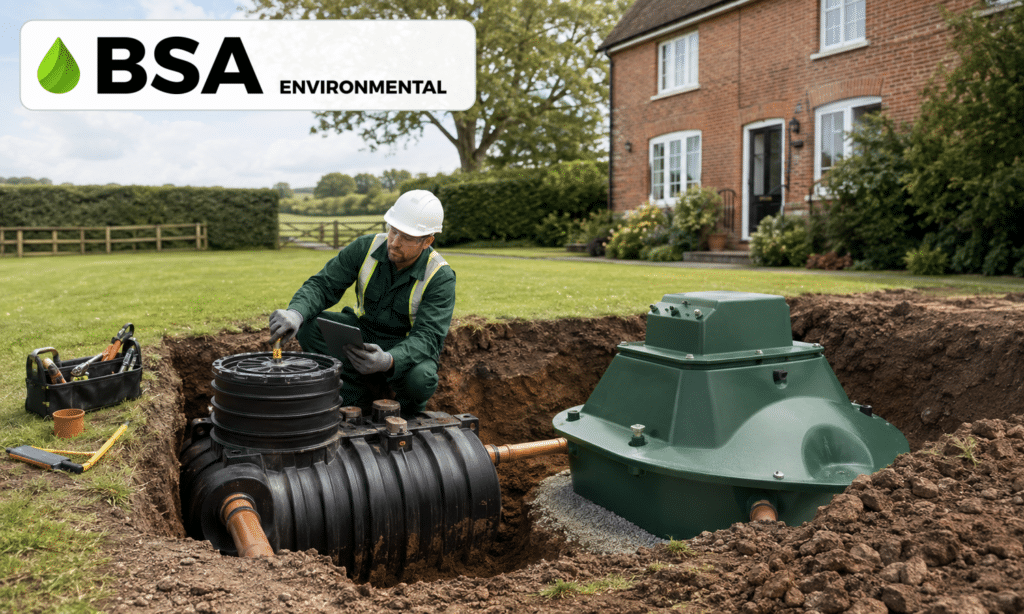
If you are buying a house with a septic tank and a survey shows that the tank or drainage field has failed, or the system discharges to a watercourse, replacement is the usual answer. Options include a new septic tank with a drainage field, or a sewage treatment plant where ground conditions or the discharge point call for one.
Installing a new system needs building regulations approval. A new discharge, or one that has moved more than 10 metres or changed type, counts as a new discharge under the rules, and since 2 October 2023 you may be required to connect to the mains sewer if the Environment Agency decides it is reasonable. You can see an example of a recent job in our case study on a new septic tank and soakaway.
Who pays is a matter for negotiation between buyer and seller. Your conveyancer can advise on how to reflect the cost in the contract.
Frequently asked questions
Can you sell a house with a septic tank?
Yes. Homes with septic tanks are bought and sold all the time, especially in rural areas. As the seller, you must tell the buyer in writing that a sewage discharge is in place, describe the system and where it is, and pass on any changes and maintenance records. If the system does not meet the general binding rules, expect the buyer to ask for it to be put right or for a price reduction.
Can you sell a house with an old septic tank?
Yes, an old septic tank does not stop a sale on its own. What matters is whether it is in good working order and discharges correctly. A septic tank must discharge to ground through a drainage field, never straight to a watercourse. If an older tank leaks, smells or drains to a ditch or stream, it will need repairing, upgrading or replacing.
What does a septic tank survey check?
If you are buying a house with a septic tank, a survey looks at the system itself rather than just noting it exists. An engineer identifies the type of system, checks the tank, pipes and lids, traces where it discharges and looks at the drainage field. A CCTV camera may be used on the pipes. The aim is to tell you whether the system works and appears to meet the general binding rules.
What paperwork should I ask for when buying a house with a septic tank?
Ask for the seller’s written details of the system, which the rules require them to give you. This should cover the type of system, where the tank, drainage field and discharge point are, any changes made, and how it should be maintained. Also ask for emptying receipts, service invoices and any installation or building regulations paperwork.
Do I need a permit for a septic tank?
Usually not. If the system meets the general binding rules, no permit is needed. A permit may be needed if it discharges more than 2 cubic metres a day to ground, is in or near certain protected sites, or cannot meet the rules for another reason. The gov.uk guidance explains when a permit applies.
Talk to an off-mains drainage specialist
Whether you are buying a house with a septic tank or selling one in Solihull, Warwickshire, Worcestershire or the wider West Midlands, BSA Environmental can help you understand the system before the sale goes through. Our engineers work on septic tanks, soakaways, sewage treatment plants and cesspools, and can explain what we find in plain English.
Call us on 01564 784899 or get in touch online to arrange a site visit. We cover Solihull, Birmingham, Coventry, Stratford-upon-Avon, Warwick, Leamington Spa, Redditch, Bromsgrove, Worcester and Walsall.